
Case studies //
Adzemble
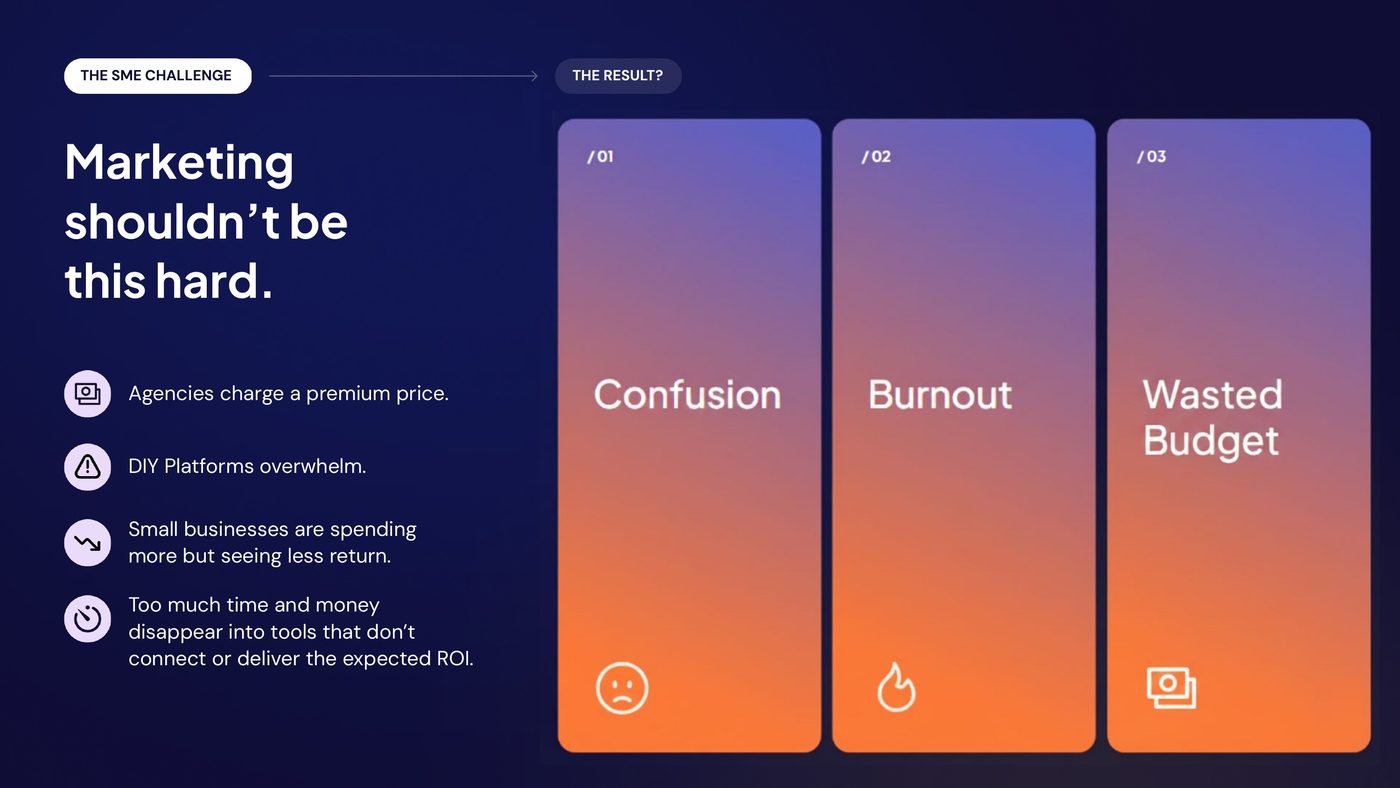
5.5 million UK small businesses spend real money on paid ads with no way to know whether the creative will work, and an enterprise-grade capability that could finally give them the answer, priced and positioned for them.
- Sector
- Tech & SaaS
- Engagement
- Proposition & Product Strategy
- Period
- 2025
01 //
What I walked into
An enterprise creative-intelligence platform had a patented algorithm, ten years of creative-performance data and a client list of the world's largest advertisers. It also had an obvious adjacency it had never taken: the enormous long tail of small businesses spending real money on paid ads with no way to know whether the creative would work.
The strategic call was clear: this couldn’t be a cheaper, cut-down version of the enterprise product. Selling an enterprise platform down-market dilutes the enterprise brand and confuses the small buyer, who doesn’t want a lite version of something complicated, but a straight answer about where their ad budget is leaking. It had to stand on its own, with its own name, promise and price.
So the question was never “can we build it”. It was: what exactly is the product, who is it for, what will they pay, and will anybody actually say yes before a line of code is written.
02 //
What was actually going on
This was a positioning problem wearing a product costume. The technology was proven; what did not exist was a proposition: a separate brand with its own name, its own promise, its own price and its own buyer, standing on that enterprise data without inheriting its complexity. Get that right on paper, validate it with real SMEs, and the build becomes a funding decision rather than a gamble.
03 //
The work
- 01
Proposition and brand architecture
- Defined a separate brand rather than a cut-price version of the enterprise platform, deliberately, so the enterprise positioning stayed intact and the small buyer got something built for them.
- Set the strategy: start where SME spend leaks the most, which is paid advertising, and earn the right to the wider suite later.
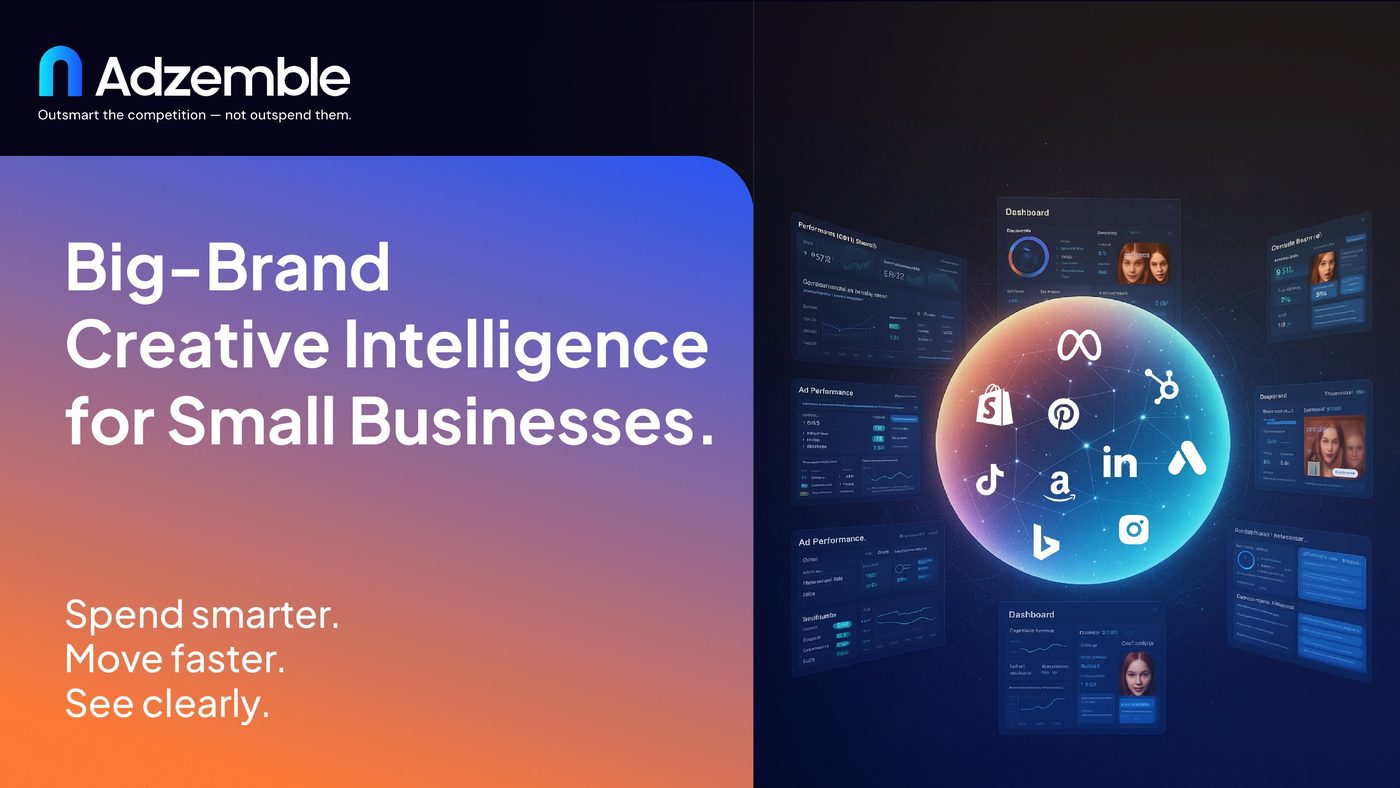
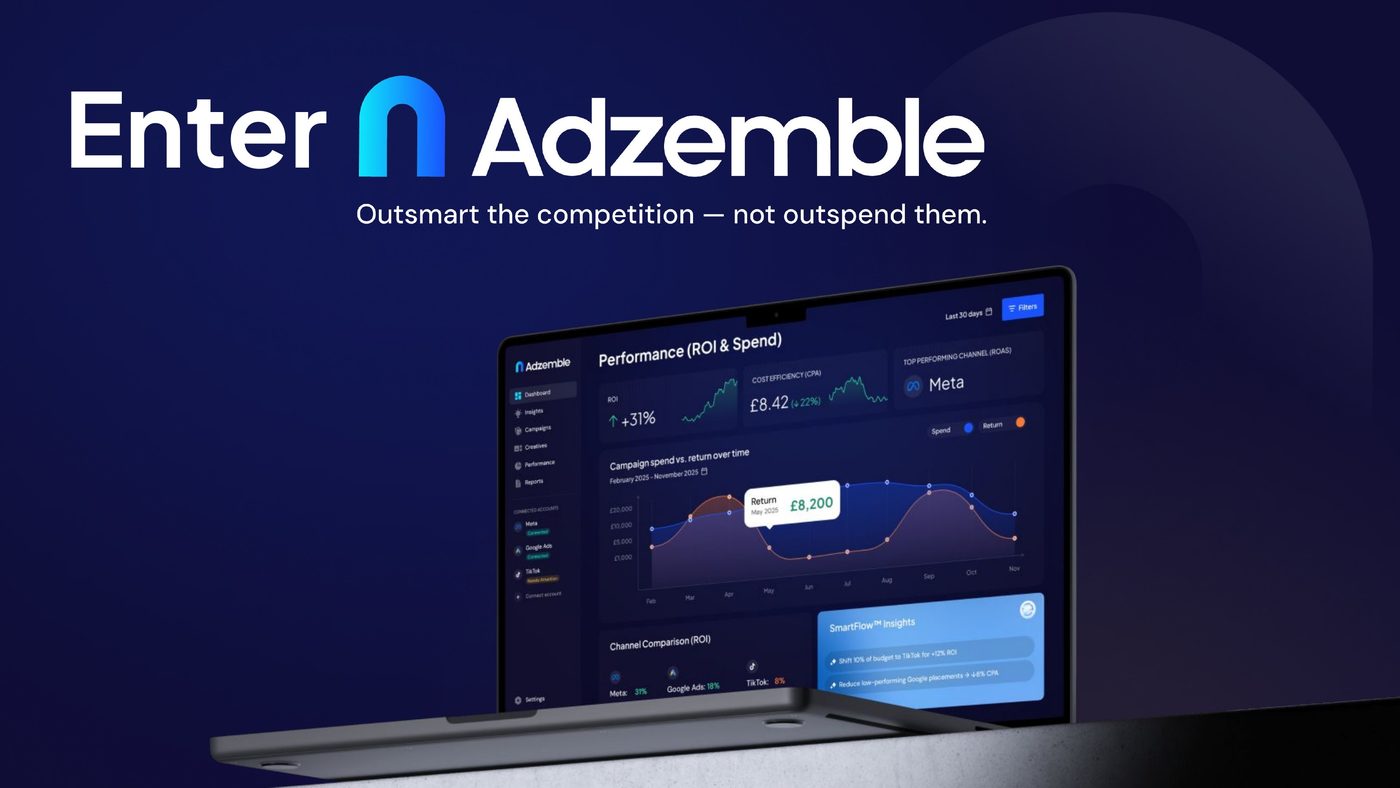
- Wrote the proposition and the line it hangs off: outsmart the competition, not outspend them.
- Named and defined SmartFlow™, the insight layer that turns a dashboard into a recommendation.
- 02
Product definition
- Specified the product: creative scoring built on the existing algorithm, industry benchmarking, pre-launch compliance checks for Meta, TikTok and Google, cross-channel reallocation insight, and a continuous learning loop.
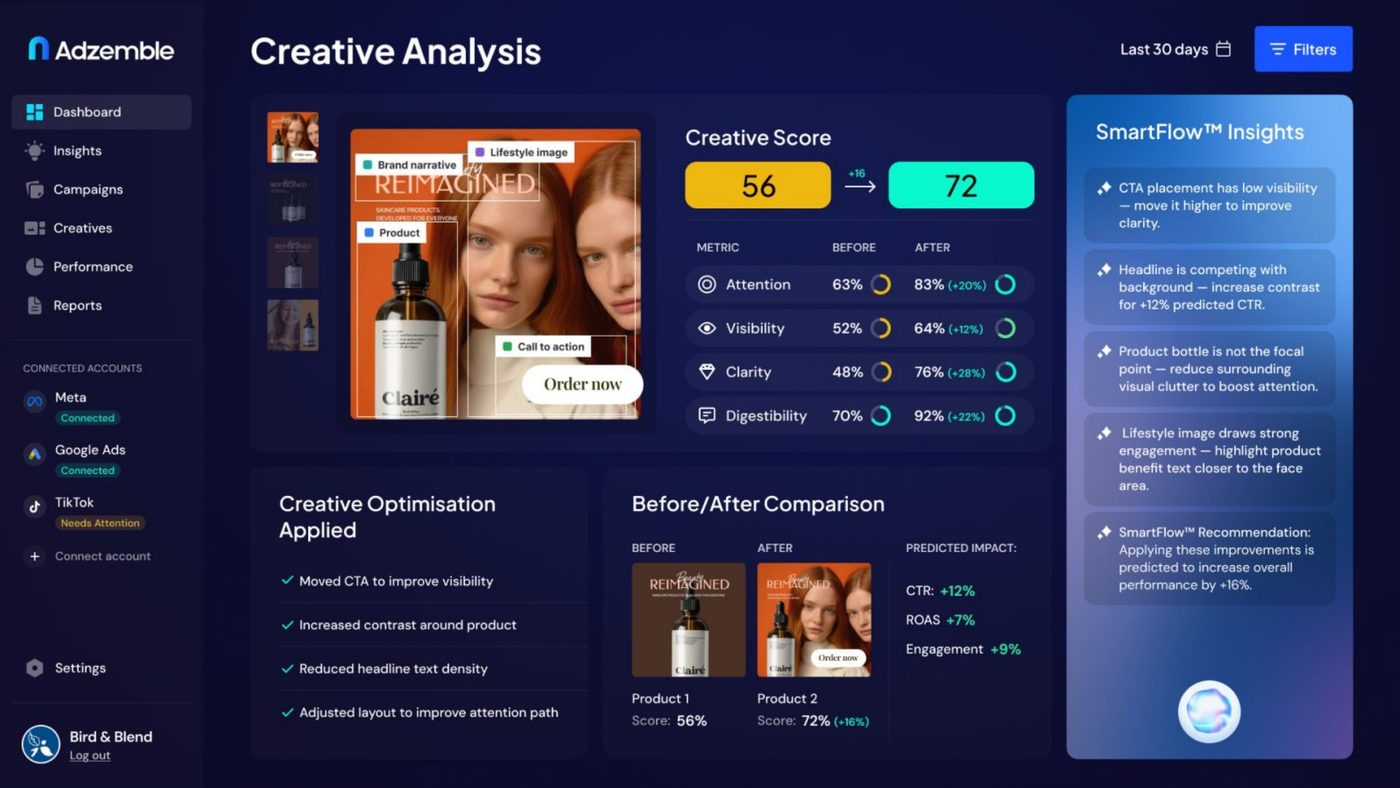
- Wireframed the dashboards myself to make the concept arguable rather than abstract: creative analysis, before/after scoring, ad performance, ROI reporting.
- Briefed and directed the designer through mood boards, brand guidelines and the final mockups.
- Sequenced the roadmap so the first release could be tested for willingness to pay rather than built in full and hoped over.
- 03
Market and competition
- Sized the market from the bottom up: 5.5 million UK SMEs, 200–300k running paid ads consistently, 140–200k a strong fit for this product.
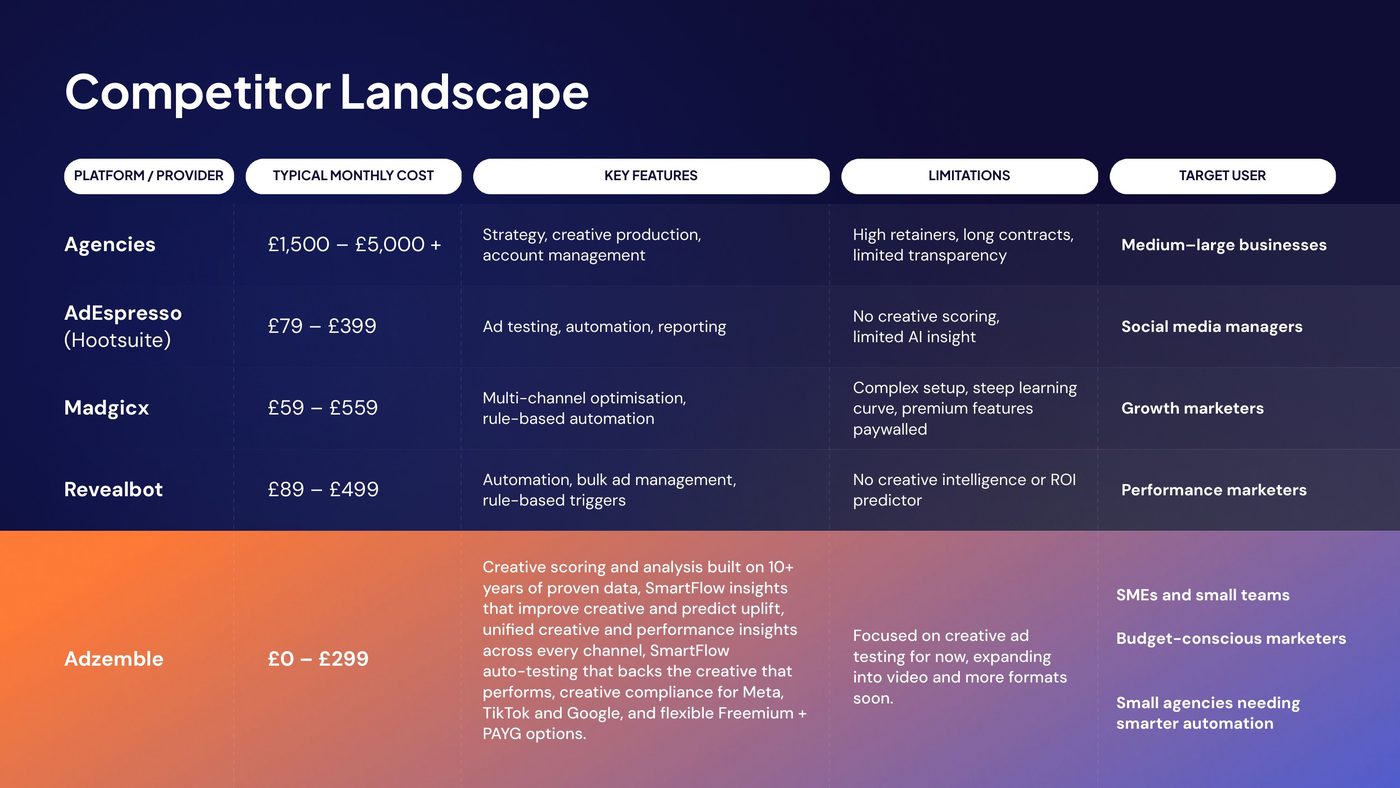
- Built the competitor landscape (agencies, AdEspresso, Madgicx, Revealbot) and found the gap: nobody was doing creative scoring at an SME price.
- 04
Validation
- Set the hypotheses with the product and technology leads, so the interviews tested the risky assumptions rather than collecting compliments.
- Wrote the SME outreach and ran the sessions: agency owners, e-commerce founders, CFOs, performance-marketing specialists.
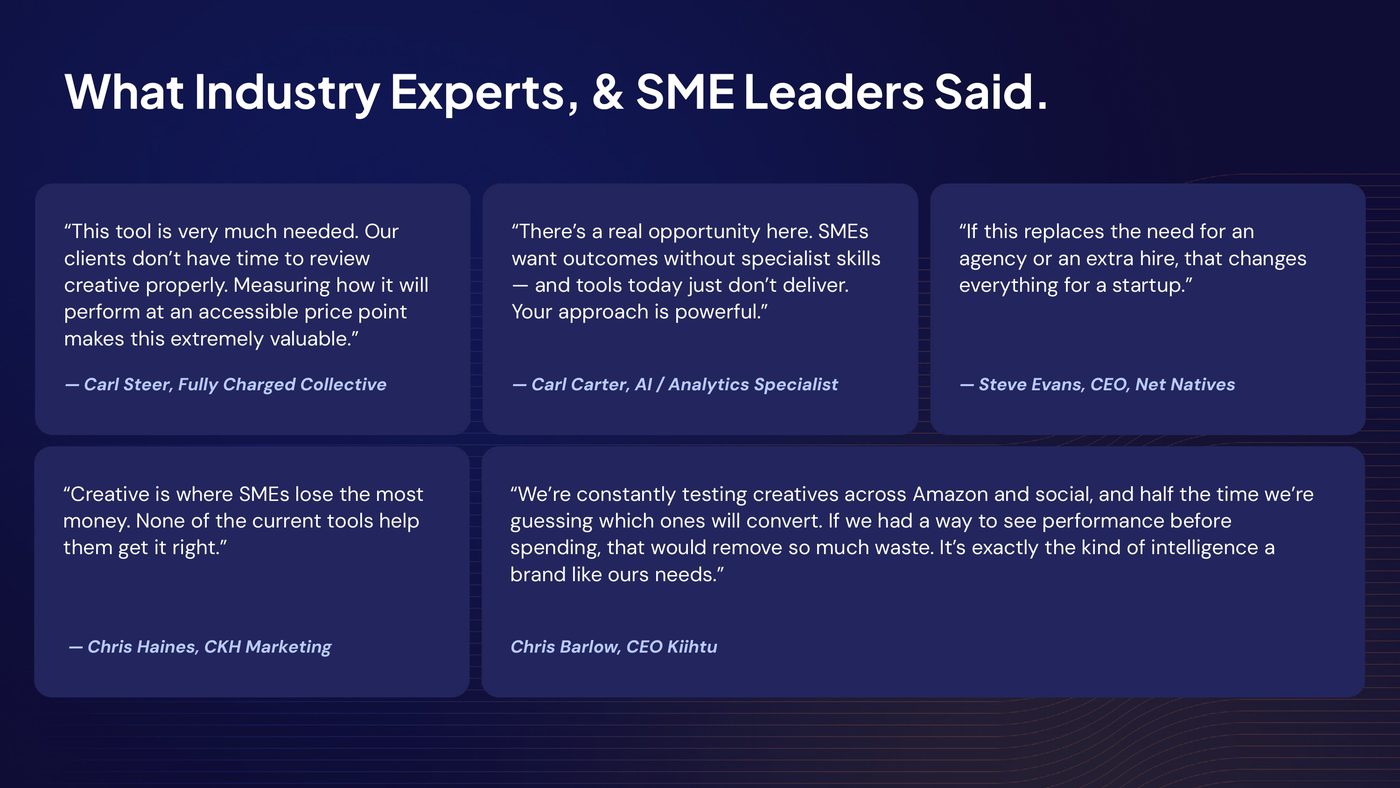
- Captured named, on-the-record quotes from industry experts and SME leaders, and put them in the deck rather than paraphrasing them.
- Fed the findings back into a January pivot on the freemium model and the upgrade path.
- 05
Board case
- Turned all of it into a 21-slide deck that runs from the problem to the proposition to the product.
- Presented to the board as an investment decision with the evidence attached.
04 //
What changed
1
proposition deck, ready for board investment and go-to-market
Proposition, brand, product definition, UI concept, competitor landscape and validation evidence, built from an adjacency nobody had defined.
5
named experts and SME leaders on record
Agency owners, e-commerce founders and performance-marketing specialists, quoted by name in the deck. “If this replaces the need for an agency or an extra hire, that changes everything for a startup.”
140–200k
businesses in the addressable segment
Sized bottom-up from 5.5 million UK SMEs, narrowed to those consistently running paid ads and matching the profile.
05 //
The work itself
A proposition only exists once someone can see it. The deck is the argument; the dashboards are the proof it could be a product.
Proposition21 slides · concept to board
Validation deck
Written to survive three different rooms: an SME founder deciding whether to care, an industry expert looking for the hole in it, and a board deciding whether to fund it. The order does the work: the problem in the buyer's own words, then the market, then the product. The dashboards are concept, not screenshots; I wireframed them so people could argue with something real instead of nodding at an idea.
Why this might matter to you //
Most businesses sitting on a strong asset have an adjacency they can see but can't articulate: a market they could serve if only the thing had a different name, a different price and a different promise. The work isn't building it. It's defining it precisely enough that a customer can say yes and a board can say fund it, in that order.
Brand & Positioning Define what you stand for, who you’re for, and why you’re the right choice.
Marketing Strategy Positioning, audience, channels, and a roadmap connected to revenue.
Start-up Marketing Advisory Stress-test your proposition before you take it to market.