Case studies //
Hobbify
An affiliate business set up from nothing: the market intelligence, the niche economics, the brand, and an AI-visible content engine. Hobbify is the independent editorial layer over the UK craft market, built to earn its commission by saying the things platforms can't credibly say about themselves.
- Sector
- Consumer · Affiliate
- Engagement
- Affiliate business set-up, brand and build
- Period
- 2026 — ongoing
01 //
What this started as
An observation: the UK craft workshop market had consolidated (ClassBento acquired Obby in late 2024), the best marketplace in the category was almost unknown outside the craft community, and nobody independent was writing the comparisons, evaluations and gift guides that searchers, and increasingly AI assistants, were asking for.
That is the classic shape of an affiliate opportunity: real demand, commissionable suppliers, and an editorial job the suppliers cannot do for themselves. But an affiliate business set up on instinct is a blog with links in it. This one was set up like a business.
02 //
What an affiliate business actually needs
Two things decide whether an affiliate site earns: credibility and distribution. Credibility means genuinely independent reviews; the site's value is precisely that it isn't the platform talking. Distribution now means two channels at once: Google rankings and AI answers, because a growing share of "best pottery class near me" questions never touch a results page. So the set-up ran research-first: prove the demand, model the economics niche by niche, build the brand standards that protect independence, then build a site that both engines can read.
03 //
The work
- 01
The business case: before any building
- A 15-brand audit of the UK craft landscape: each brand's positioning, keywords, AI visibility and crawler policy, mapped before a line of code was written.
- 85 keyword clusters mapped with real search volumes to size the demand, from 90,500 monthly searches at the gift end down to the long tail of individual crafts.
- The gaps that made the case: no credible third-party comparison of the two big platforms; an acquired brand's orphaned audience up for grabs; and market leaders blocking AI crawlers, invisible in exactly the channel growing fastest.
- 02
Affiliate economics, niche by niche
- A masterplan per craft (crochet, knitting, embroidery, sewing) pairing search demand with commissionable courses, kits and platforms, so every niche entered has a modelled path to revenue.
- Course-level SEO deep dives and forecast models per niche: what to rank for, what it pays, and in what order to build.
- 03
A brand that protects the model
- Brand story, tone of voice and editorial standards written down before launch: friendly, honest, no-fluff, and no paid placements, because independence is the product.
- The credibility layer built into the site itself: a published review methodology, named authorship, and a plain-English affiliate disclosure.
- 04
Built to be found: by Google and by AI
- Site architecture designed from the keyword map: crafts, workshops by location, platform reviews, and gift guides by occasion, recipient and price.
- 50 AI answer-engine prompt targets identified, 20 of them uncontested, and the site configured to be more AI-visible than any brand it writes about, with structured data on every page and every major AI crawler welcomed.
- A category launch process, so each new craft ships with the same research, pages and affiliate wiring as the last.
- 05
Launch operations
- Static Astro site on Cloudflare, built and developed through Claude Enterprise: fast, cheap to run, no developer required.
- A standing measurement loop: daily rank tracking, weekly technical crawls, monthly SEO audits, the same discipline sold to clients, applied at home.
04 //
What changed
15
competitor brands audited before the build began
The business case came first: a full landscape audit of the UK craft market (positioning, keywords, AI visibility and crawler policy for every significant player) before anything was built.
85
keyword clusters mapped to size the demand
The demand map that chose the niches and drew the site's architecture, from 90,500 monthly searches at the gift end to the long tail of individual crafts.
4
affiliate masterplans, one per craft
Crochet, knitting, embroidery and sewing, each with demand, commissionable supply and a modelled path to revenue, so building order is a decision, not a guess.
20
uncontested AI answer targets identified
Questions people already ask AI assistants about UK crafts where no credible source is being cited. Content built for those queries has no incumbent to displace. Deliberately no traffic or revenue claims here yet. Those get added when they're real.
05 //
The work itself
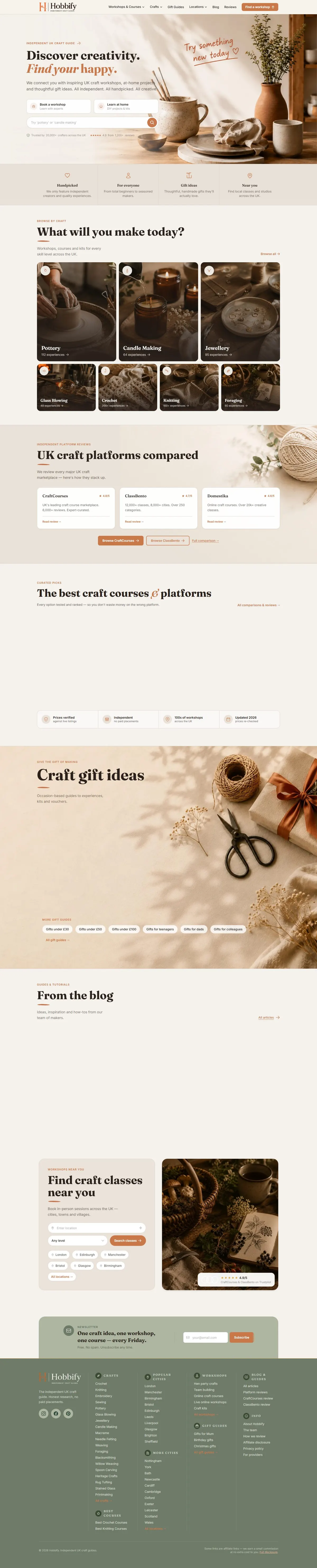
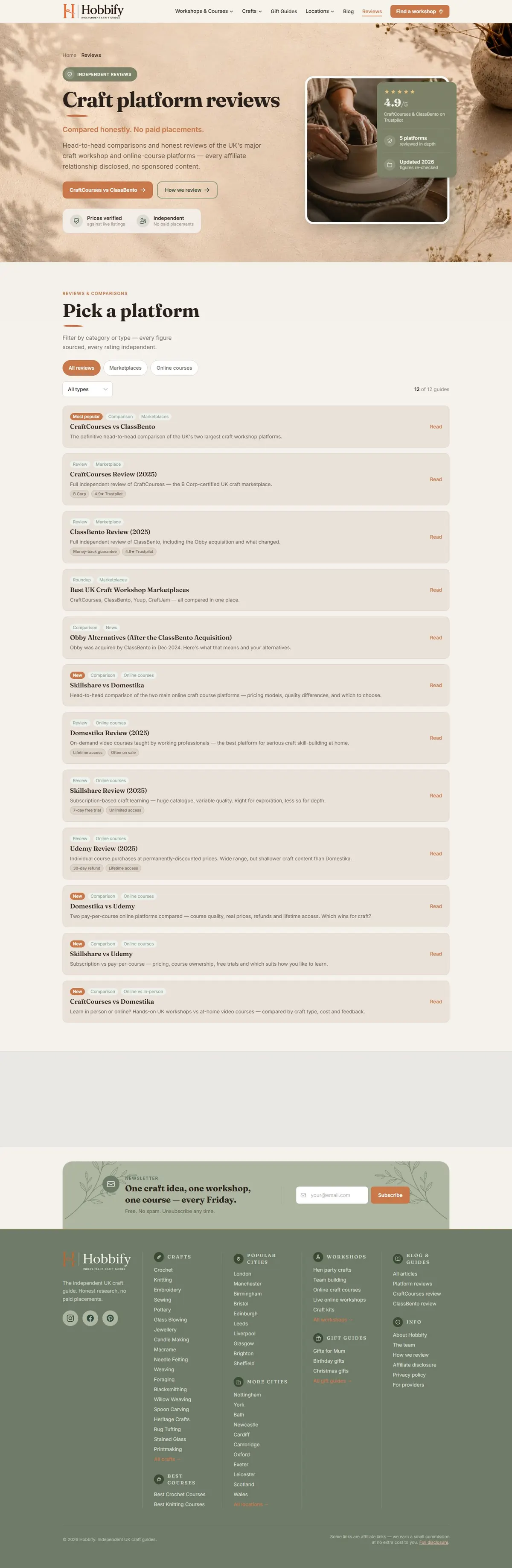
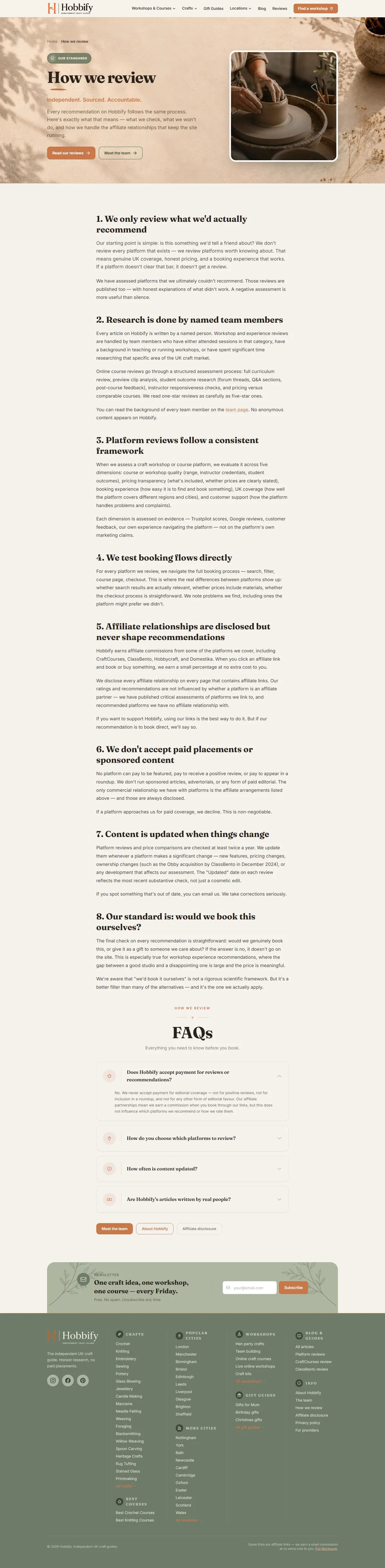
A live affiliate business, not a deck about one. Independent platform reviews, occasion-led gift guides, and the published methodology that makes the independence checkable. Scroll inside each window.
The ventureIndependent UK craft guide · built and launched 2026
hobbify-skills.com
The affiliate model on the page: platform comparisons the marketplaces can't write about themselves, gift guides mapped to how people actually search, and a review methodology published in full, because for an affiliate business, being visibly independent is the commercial strategy.

Why this might matter to you //
This is the playbook for any business that wants an affiliate or content-revenue arm: prove the demand before building, model the economics niche by niche, write down the editorial standards that protect your credibility, and build for the two engines that now decide visibility: Google and AI answers. The same set-up works whether the affiliate business is the whole company or a new revenue stream bolted onto an existing one.
SEO Consultant, AEO & GEO An SEO consultant for search engines and the AI that increasingly answers instead of them.
Marketing Strategy Positioning, audience, channels, and a roadmap connected to revenue.
Start-up Marketing Advisory Stress-test your proposition before you take it to market.